About
CATA proudly serves the cities of Lansing and East Lansing and the townships of Delhi, Lansing and Meridian.

Buildings and Fleet
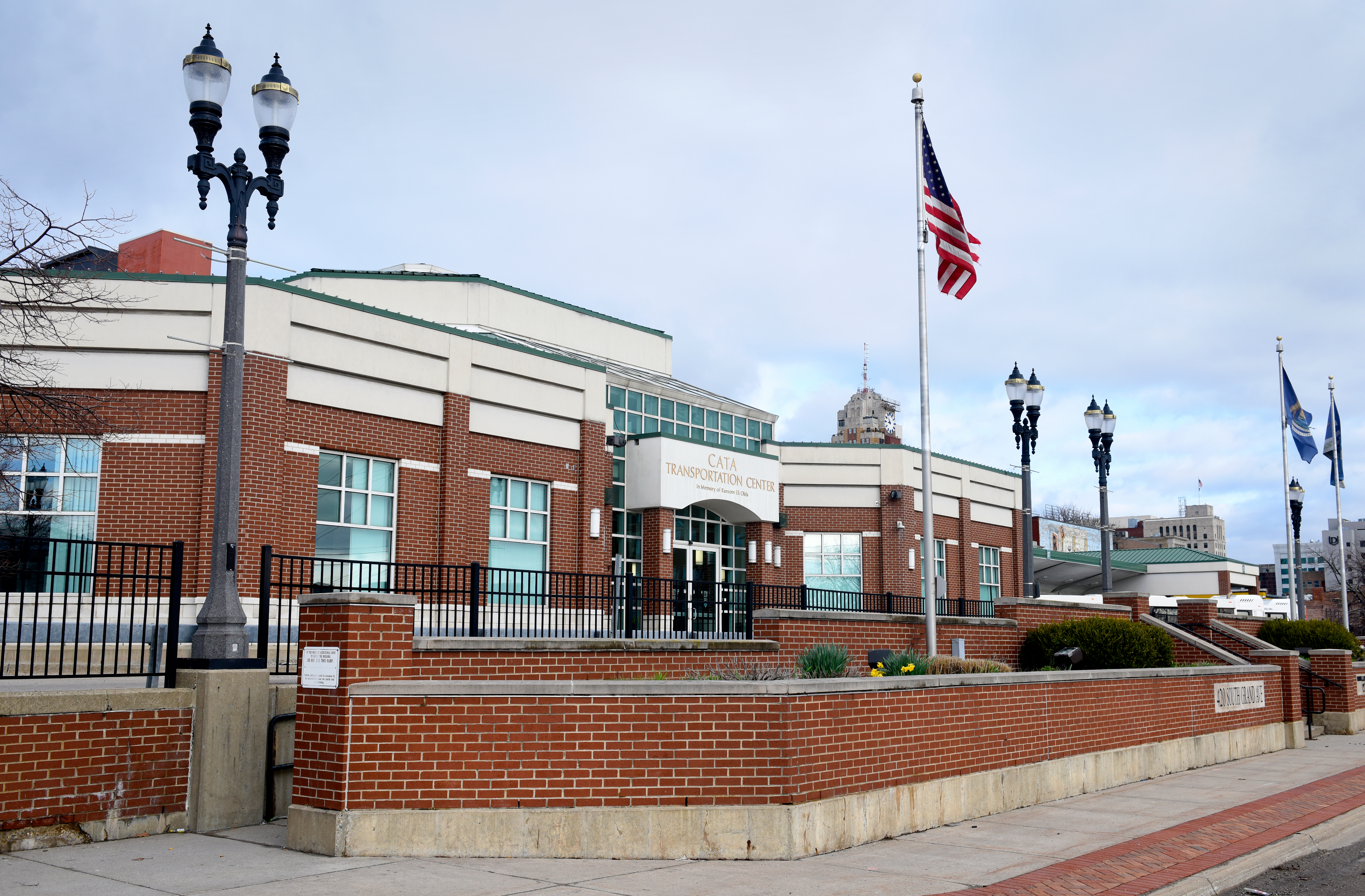
CATA operates two transit centers that serve as the region's primary public transportation hubs and maintains its Administrative Offices where all departments and buses are housed under one roof. Each location offers in-person assistance and resources to support its transit services.
Commitment
Driving mobility solutions for the Capital City region since 1972, the Capital Area Transportation Authority was formed under Act 55 (Public Act of Michigan 1963).

Mission
To meet the mobility needs of our region by providing innovative solutions in partnership with the communities we serve.

Vision
CATA will ensure public trust by re-imagining regional mobility challenges and how we better engage those we serve.

Goals
Goal 1: Regional Mobility
Facilitate seamless and innovative multimodal transportation solutions throughout the tri-county area.
Goal 2: Customer Experience Excellence
Employ best practices that lead to new and returning customers.
Goal 3: Organizational Strength
Promote organization-wide efficiency and effectiveness. Lead by example toward continuous improvement.
Goal 4: Community Partnership
Exhibit responsible leadership through community engagement and public service.
Goal 5: Dynamic Workplace
Create a meaningful workplace that engages, empowers and values its employees.

Values
- CATA is committed to transparency in action, which inherently fosters trust and innovation.
- We will approach community partners, customers and employees in the spirit of cooperation
- CATA is committed to providing a safe experience for our customers, employees and the public we serve.
- CATA seeks to implement sustainable solutions as stewards of the community we serve; the planet and its finite resources.
- Professionalism and integrity drive CATA's actions and decisions.
- Accountability and the desire to always do the right thing serve as our guiding compass.
Leadership
CATA's leadership philosophy is based on service to our community.



Local Advisory Council
LAC representatives advise CATA on senior and disability issues.
CATA-ATU
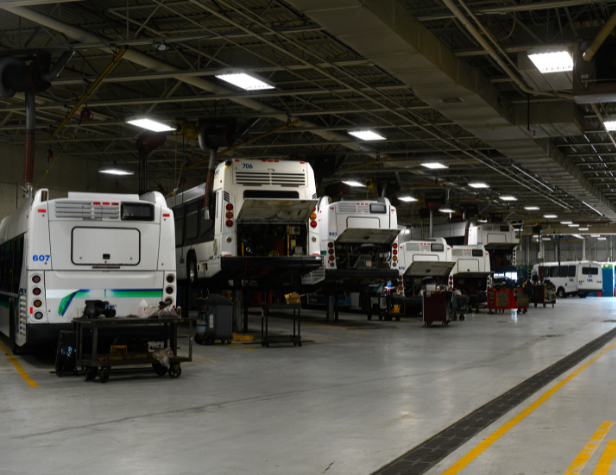
CATA bus operators and mechanics are represented by the ATU Local No. 1039.
CATA Facts
At its founding in 1972, CATA had seven fixed routes and delivered 732,609 total trips systemwide. In fiscal 2019, we delivered 11,049,317 annual trips – the agency’s strongest ridership growth since fiscal 2007. In March 2020 the COVID-19 pandemic resulted in dramatic ridership declines. For a brief period, fixed-route rides were suspended, and curb-to-curb, demand-response rides were reserved for first responders and those seeking life-sustaining health care and services. Ridership totaled 7,306,550 for fiscal 2020. At the peak of the pandemic In fiscal 2021, CATA delivered 3,030,644 trips. In fiscal 2022, ridership was recorded at 5,399,227 trips systemwide – a healthy rebound. Fiscal 2023 concluded with a remarkable 41.4 percent growth in ridership which translated to an additional 2.2 million trips and an overall total of 7.63 million rides for the year. In CATA's most recent fiscal year, FY 2025, ridership grew 8.4% to over 9.5 million rides.
CATA currently operates 32 fixed routes and various paratransit services. A snapshot of our ridership follows:
FY 2025 was the strongest year on record with over 9.5 million total trips—9,119,572 on fixed routes and 395,321 through paratransit services.
FY 2024 continued the upward trend with 8,854,163 total trips, building on FY 2023's 7,633,877 — the first year ridership surpassed pre-pandemic levels.
FY 2022 marked the beginning of the recovery with 5,399,227 trips, following the significant drop in FY 2021 to 3,030,644 trips during the height of COVID-19 disruptions.
FY 2020 closed with 7,306,550 total trips before the pandemic reshaped travel patterns across the region.
Fiscal 2026 Budgeted Operating Revenue:
- 48.3% Local funding
- 32.7% State funding
- 2.9% Federal funding
- 16.1% Fares and other revenues
CATA provides a variety of public transportation services in the Greater Lansing and outlying areas. The 559 square-mile service area spans all of Ingham County and extends into portions of Eaton County (Delta Township) and Clinton County.
CATA’s workforce comprises 390 employees*:
- 255 are bus operators who are members of the Amalgamated Transit Union (ATU) Local No. 1039
- 38 are Maintenance employees who also belong to ATU Local No. 1039 – namely mechanics and mechanic support staff
- 97 are administrative personnel
*As of Oct. 1, 2025